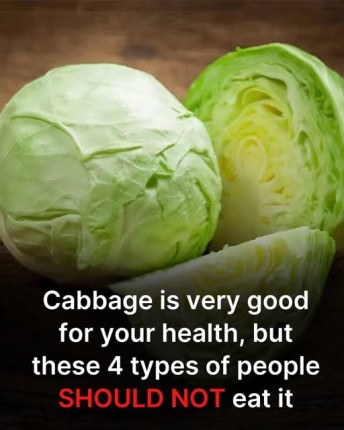
Here’s a clear and detailed look at 4 types of people who should be cautious or avoid eating cabbage, along with the reasons:
1. People with Thyroid Problems (Hypothyroidism or Goiter Risk)
- Cabbage is a cruciferous vegetable, containing compounds called goitrogens.
- Goitrogens can interfere with iodine uptake, which the thyroid needs to produce hormones.
- Risk is higher if eaten raw in large amounts.
- Tip: Cooking cabbage reduces goitrogen content, making it safer.
2. People with Digestive Issues (Gas, Bloating, IBS)
- Cabbage contains complex sugars and fiber that are hard to digest.
- Can cause gas, bloating, stomach cramps, or worsen IBS symptoms.
- Those prone to flatulence or abdominal discomfort should eat small portions or cook it thoroughly.
3. People on Blood-Thinning Medications
- Cabbage is high in vitamin K, which helps blood clot.
- If you are on warfarin or other blood-thinning medications, sudden or excessive intake of cabbage can interfere with medication effectiveness.
- Tip: Maintain a consistent amount of vitamin K in your diet and consult your doctor before major changes.
4. People with Kidney Problems
- Cabbage contains potassium, which is normally healthy, but high potassium intake can be risky for those with chronic kidney disease (CKD).
- Excess potassium can lead to heart rhythm problems if kidneys can’t filter it properly.
Extra Tips
- Cooking cabbage reduces gas-causing compounds and goitrogens, making it easier on the stomach and thyroid.
- Moderation is key—most healthy people can enjoy cabbage without issues.
If you want, I can make a quick visual “Who Should Avoid Cabbage” guide that’s easy to glance at, showing these 4 groups and why. It’s perfect for sharing or keeping as a reference.
Do you want me to do that?
