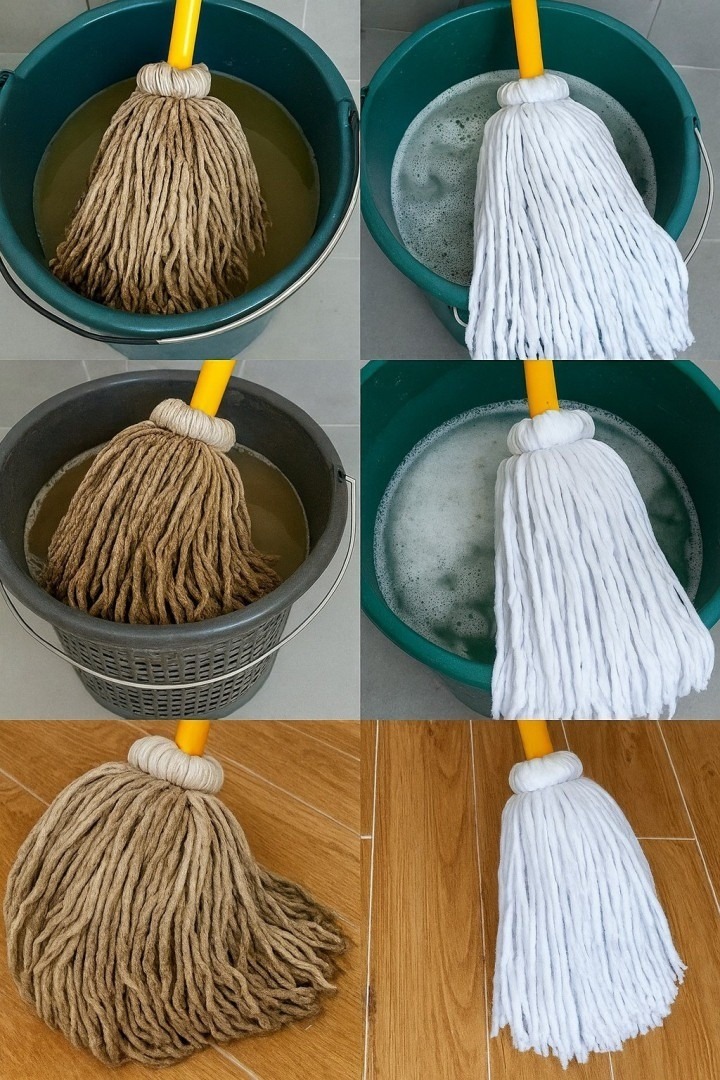
Very Dirty Mop? Don’t Buy a New One—Try This Instead
If your mop smells bad, looks grimy, or seems to spread dirt instead of cleaning, you don’t need to throw it away. In most cases, a deep clean can make it like new again.
What you’ll need
- Hot water
- White vinegar or baking soda
- Dish soap
- (Optional) Hydrogen peroxide
- A bucket or sink
- Rubber gloves
⚠️ Never mix vinegar and bleach—that creates toxic fumes.
Step-by-step deep-clean method
1. Remove loose dirt
Rinse the mop head thoroughly under hot running water to wash away surface grime.
2. Soak to kill germs and odors
Fill a bucket with very hot water, then add:
- 1 cup white vinegar
or - ½ cup baking soda
Soak the mop for 30–60 minutes.
3. Scrub if needed
Add a few drops of dish soap, then rub the mop fibers together (or against the sink) to loosen trapped dirt and grease.
4. Extra disinfecting (optional)
If the mop is heavily soiled:
- Add ½ cup hydrogen peroxide to fresh hot water
- Soak for 15–20 minutes
5. Rinse thoroughly
Rinse until the water runs clear and there’s no smell left.
6. Dry completely
Wring out excess water and let the mop air-dry standing upright or hanging.
👉 Drying fully is key to preventing bacteria and mold.
For different mop types
- Microfiber mop heads: Most are machine washable (hot cycle, no fabric softener).
- Sponge mops: Soak longer and squeeze repeatedly to flush out dirt.
- String/cotton mops: This method works especially well.
How often to clean your mop
- After cleaning kitchens or bathrooms: every use
- General floor cleaning: once a week
- Replace only if fibers are falling apart or won’t come clean anymore
Bonus tip
To keep your mop fresh longer, rinse it with hot water and a splash of vinegar after every use.
If you want, I can also share:
- A natural floor-cleaning solution
- How to disinfect mops without chemicals
- Signs it’s truly time to replace a mop instead of cleaning it
