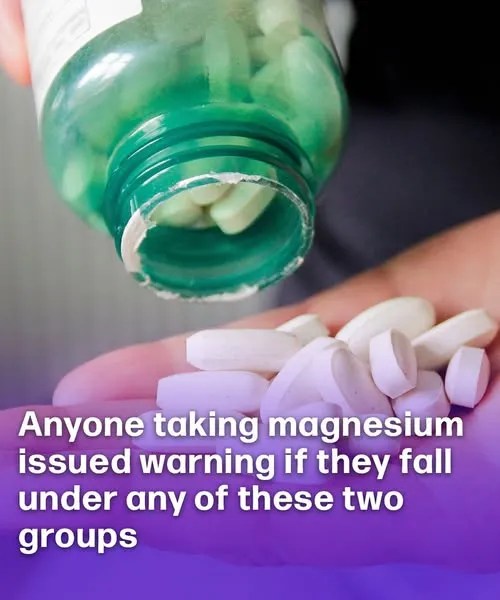
Here’s a balanced, expert‑informed breakdown of the new warning about magnesium supplements — especially who should be cautious or avoid them entirely.
🧠 Why Magnesium Supplements Aren’t Always Risk‑Free
Magnesium is an essential mineral that supports muscle, nerve, heart, and bone health — and most people get enough from food sources like nuts, leafy greens, beans, and whole grains. (Office of Dietary Supplements)
But magnesium from supplements — especially in high doses — isn’t always harmless. Unlike dietary magnesium from food, supplemental magnesium can build up in the body and cause side effects even at doses that seem “normal.” (Office of Dietary Supplements)
⚠️ 1. Magnesium Overdose and Toxicity
Doctors and health experts are warning that too much supplemental magnesium can cause real health problems. Symptoms range from mild to serious:
- Digestive upset: diarrhea, nausea, stomach cramps
- Muscle weakness and fatigue
- Low blood pressure or irregular heartbeat
- Confusion, dizziness, breathing difficulties in severe cases
- In extreme cases, cardiac arrest has been reported with very high blood levels. (WebMD)
This is not typically seen from magnesium in food, but from supplements or medications containing magnesium if taken in large amounts or without medical oversight. (Office of Dietary Supplements)
👥 2. Two High‑Risk Groups Who Should Be Especially Careful
🩺 1. People with Kidney Disease
If your kidneys don’t work well, they can’t remove excess magnesium from your blood.
- This can lead to dangerous buildup — a condition called hypermagnesemia — which can affect heartbeat and breathing.
- Experts strongly advise avoiding or strictly supervising magnesium supplements if you have chronic kidney conditions or impaired renal function. (Tonum)
❤️ 2. People Taking Certain Medications or With Heart Conduction Issues
Magnesium affects how muscles and nerves fire, including the heart.
- People on blood pressure or heart rhythm medications may experience excessive effects if magnesium is too high.
- Those with heart block or electrical conduction disorders should be cautious, as extra magnesium can further slow heart signals. (HSN Store)
📌 Other Groups Who May Need Extra Caution
These groups aren’t always as widely mentioned, but experts say to consult a doctor before taking magnesium supplements:
- Older adults: Kidney function can decline with age even if standard labs look “normal.” (Tonum)
- People on laxatives or antacids containing magnesium: These products can add up quickly when combined with a supplement. (ECHA)
- People with bleeding disorders: Magnesium may affect clotting. (Vital.ly)
🧾 Safe Use Tips
✅ Stick to recommended limits: Most guidelines suggest ≤350 mg/day of supplemental magnesium for adults without medical supervision. (Office of Dietary Supplements)
✅ Get magnesium from food first: Foods naturally rich in magnesium pose no risk of toxicity. (Office of Dietary Supplements)
✅ Talk to your doctor before starting magnesium — especially if you fall into any of the high‑risk groups above.
🩹 Bottom Line
Magnesium supplements can be beneficial for some people, but they’re not harmless pills you can take in any amount.
Experts are warning that kidney patients and people with heart rhythm or conduction issues — along with others on certain medicines or with compromised kidney function — should be especially careful or avoid supplements without medical guidance.
Unsupervised high doses can lead to toxicity, irregular heartbeat, low blood pressure, nausea, confusion, and more. (WebMD)
If you want, I can explain the difference between magnesium from food vs. supplements and how to choose the safest supplement form — just let me know!
