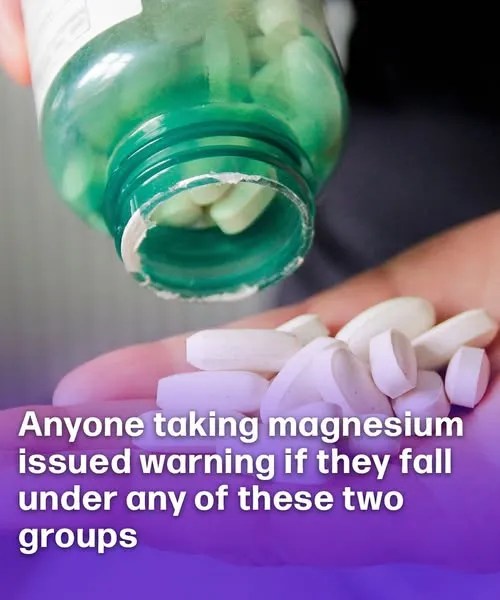
Here’s a fresh health‑expert warning about magnesium supplements — and who should be especially cautious before taking them 🧠💊:
🛑 New Caution on Magnesium Supplements
Health professionals remind that while magnesium is essential and safe for most people at normal doses, supplements are not automatically risk‑free — especially for certain high‑risk groups. (Healthline)
Magnesium supplements can cause side effects like diarrhea, nausea, abdominal discomfort, and in excessive amounts or with poor kidney function, can even lead to dangerous magnesium buildup in the blood (hypermagnesemia). (Office of Dietary Supplements)
🧠 2 High‑Risk Groups Who Should Avoid or Use Caution
1. People with Impaired Kidney Function
Your kidneys are what filter out excess magnesium.
- If kidney function is reduced or failing, magnesium can accumulate in the bloodstream instead of being excreted.
- This can lead to serious toxicity — causing vomiting, muscle weakness, dangerously low blood pressure, irregular heart rhythms, respiratory problems, and even risk of cardiac arrest.
👉 People with chronic kidney disease or on dialysis should not take magnesium supplements without strict medical supervision. (Medx)
2. Individuals with Certain Neuromuscular or Heart Conditions
Magnesium can affect muscle and heart electrical activity:
- Conditions like myasthenia gravis (a neuromuscular disease) may worsen, because magnesium relaxes muscles and can aggravate muscle weakness — potentially causing breathing difficulty.
- People with heart block or severe arrhythmias may also be at higher risk because magnesium can interfere with cardiac conduction.
👉 These groups should avoid magnesium supplements or use them only with medical oversight. (Medx)
🩺 Other Situations Where Caution Is Needed
Even outside those two major groups, experts suggest talking with a clinician before taking magnesium if you have:
- Gastrointestinal disorders like chronic diarrhea, severe malabsorption, or inflammatory bowel disease — magnesium may worsen symptoms. (Medx)
- Taking certain medications, including antibiotics, heart medicines, diuretics, or bisphosphonates — magnesium can interact and affect drug absorption or potency. (Healthline)
- Pregnancy or lactation — high doses may not be appropriate and should be guided by a healthcare provider. (cymbiotika.com)
📊 Safe Use Tips (for Most People)
✔ Most adults don’t need more than about 350 mg/day from supplements — food sources usually cover needs. (Office of Dietary Supplements)
✔ If you do take supplements: choose a form with good absorption (like citrate or glycinate) after checking with your doctor. (Healthline)
✔ Watch for side effects such as diarrhea or nausea — often a sign the dose is too high. (Healthline)
📌 Bottom Line
Magnesium supplements can be helpful for people with a confirmed deficiency, but they’re not risk‑free, and people with kidney problems or certain heart/neuromuscular conditions should avoid or only take them with medical guidance. (Medx)
If you’d like, I can explain how to tell if you actually need magnesium supplementation — including symptoms of deficiency and how doctors test for it. Would you like that?
