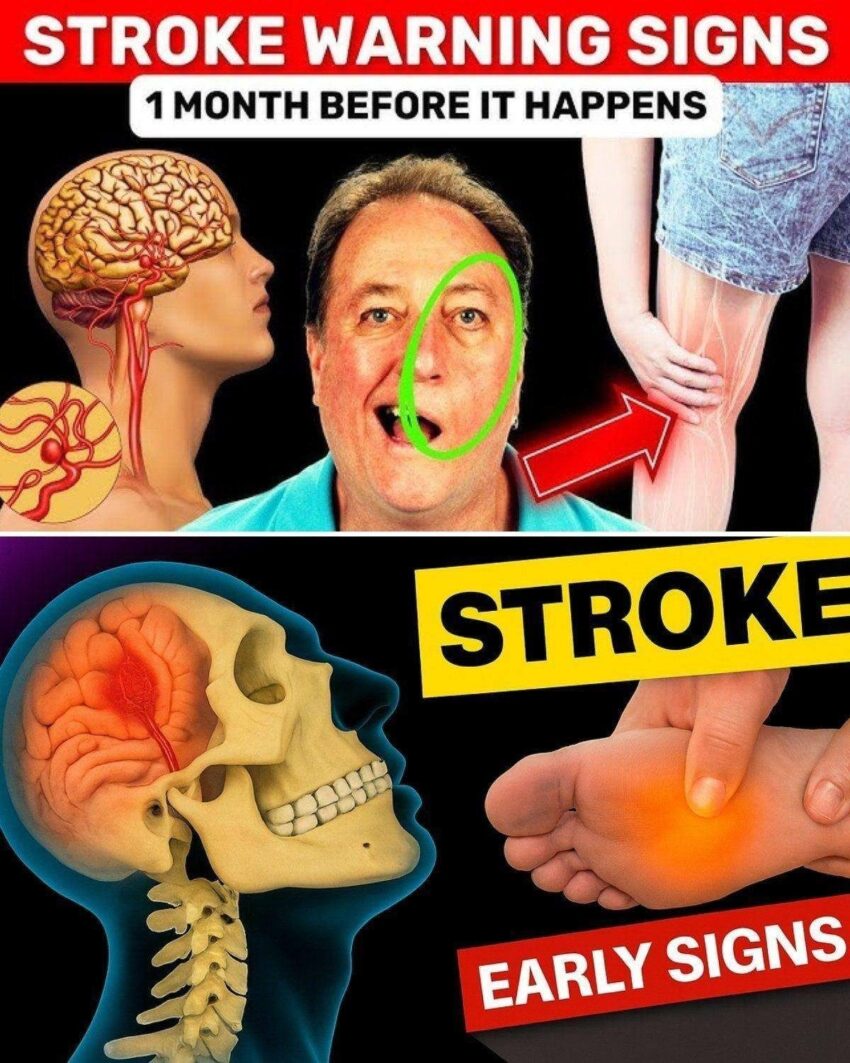
Here’s a thorough, evidence-based guide to recognizing early warning signs of stroke and taking preventive measures. Stroke is a medical emergency, and early recognition can save lives.
🔹 8 Warning Signs That May Appear Weeks Before a Stroke
Some strokes are sudden, but minor warning signs (TIAs – Transient Ischemic Attacks) can appear weeks or even a month prior:
- Sudden numbness or weakness
- Often affects face, arm, or leg, usually on one side of the body.
- Sudden confusion or trouble speaking
- Difficulty forming words, slurred speech, or understanding others.
- Sudden vision problems
- Blurred vision, double vision, or loss of vision in one or both eyes.
- Sudden dizziness or loss of balance
- Trouble walking, poor coordination, or vertigo.
- Severe headache
- Unexplained, sudden, or unusual headache, sometimes accompanied by nausea.
- Difficulty swallowing
- Choking or coughing when eating or drinking.
- Sudden fatigue or weakness
- Feeling extremely weak, tired, or lethargic without reason.
- Transient ischemic attacks (TIAs)
- Mini-strokes that resolve within minutes to hours, but signal high stroke risk.
Mnemonic to remember stroke signs: FAST
- Face drooping
- Arm weakness
- Speech difficulty
- Time to call emergency services
🔹 9 Powerful Tips to Prevent Stroke
1️⃣ Control Blood Pressure
- High blood pressure is the leading risk factor for stroke.
- Monitor regularly and take medications as prescribed.
2️⃣ Manage Blood Sugar
- Diabetes increases stroke risk.
- Maintain healthy blood sugar through diet, exercise, and medications.
3️⃣ Lower Cholesterol
- Reduce saturated fats, avoid trans fats, and consider statins if prescribed.
4️⃣ Maintain a Healthy Weight
- Obesity increases risk of stroke, high blood pressure, and diabetes.
5️⃣ Exercise Regularly
- 30 minutes/day of moderate activity like walking, cycling, or swimming.
6️⃣ Eat a Heart-Healthy Diet
- Focus on fruits, vegetables, whole grains, lean protein, and omega-3-rich foods.
7️⃣ Quit Smoking & Limit Alcohol
- Smoking damages blood vessels; excessive alcohol raises blood pressure.
8️⃣ Manage Stress
- Chronic stress can increase blood pressure and stroke risk.
- Techniques: meditation, yoga, deep breathing, hobbies.
9️⃣ Regular Checkups
- Monitor blood pressure, cholesterol, blood sugar, and heart health.
- Treat atrial fibrillation or other heart conditions that increase clot risk.
⚠️ Bottom Line
- Act fast if you notice sudden symptoms—call emergency services immediately.
- Preventive measures—healthy lifestyle, regular screenings, and medication adherence—dramatically reduce stroke risk.
- Mini-strokes (TIAs) are warnings, not harmless events; don’t ignore them.
I can also create a visual “Stroke Warning & Prevention Chart” showing early signs, FAST actions, and prevention tips—easy to memorize and keep at home.
Do you want me to make that?
