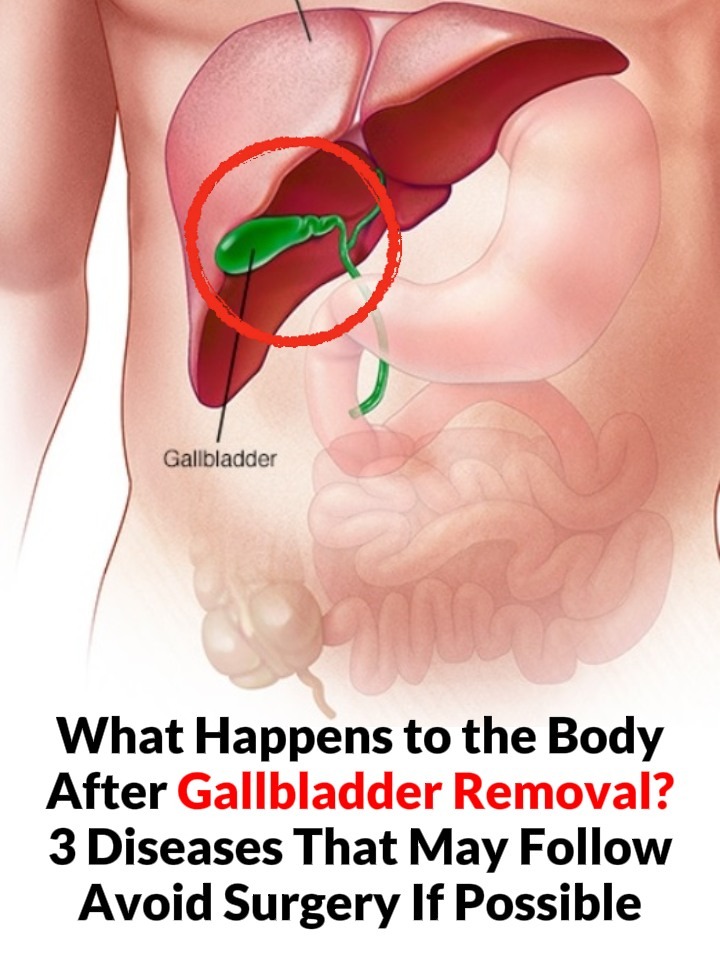
Here’s a clear, medically accurate explanation about what happens after gallbladder removal (cholecystectomy) and the real risks, without the exaggerated clickbait.
Why People Get Their Gallbladder Removed
The gallbladder stores bile, a fluid that helps digest fat. It is often removed due to:
- Gallstones causing pain or infection
- Chronic inflammation (cholecystitis)
- Rarely, gallbladder cancer
Surgery is sometimes necessary, but many people worry about long-term effects.
What Happens After Gallbladder Removal
- Bile flow changes
- Without the gallbladder, bile flows continuously from the liver into the small intestine, instead of being stored.
- This can cause:
- Loose or fatty stools
- Occasional bloating or gas
- Digestive adjustments
- Most people adapt over weeks to months
- Eating smaller, lower-fat meals helps reduce discomfort
Potential Long-Term Health Issues (Not Everyone Gets Them)
Some studies suggest a small increased risk of:
1. Digestive Disorders
- Chronic diarrhea (postcholecystectomy diarrhea)
- Mild bloating or indigestion after high-fat meals
2. Non-Alcoholic Fatty Liver Disease (NAFLD)
- Slightly higher risk in some people
- Linked to changes in bile acid flow and fat metabolism
3. Increased Risk of Certain GI Conditions
- Rarely, some develop small intestinal bacterial overgrowth (SIBO) or gallstones in the bile ducts
Important: These risks don’t mean everyone will get these diseases, and gallbladder removal is often safer than leaving dangerous gallstones untreated.
Ways to Reduce Post-Surgery Problems
- Eat smaller, low-fat meals
- Include high-fiber foods (fruits, vegetables, whole grains)
- Avoid excessive fried foods and fatty snacks
- Stay hydrated and maintain healthy weight
- Follow post-surgery medical advice
Important Takeaway
- Surgery is usually necessary only when gallstones or inflammation are serious.
- Avoiding surgery when gallstones are asymptomatic is possible, but once there is pain, infection, or obstruction, surgery is safer than leaving the gallbladder in.
- The idea of “avoid surgery at all costs” is misleading; in many cases, the benefits outweigh the risks.
If you want, I can make a practical guide to living without a gallbladder, including diet tips and lifestyle adjustments that reduce the risk of post-surgery digestive issues.
Do you want me to do that?
